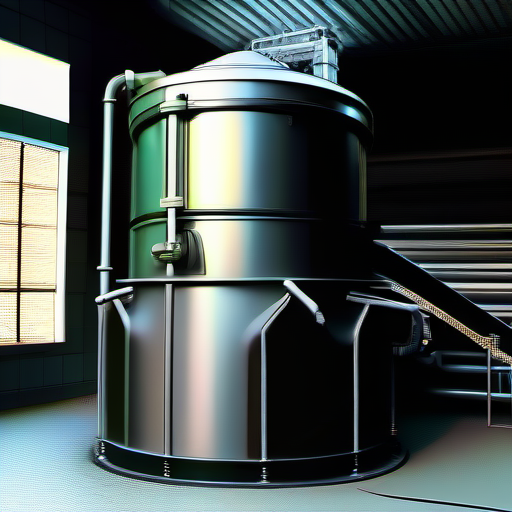
Дрilling fluid serves multiple roles at once: transporting cuttings to the surface, preventing borehole wall collapse, maintaining overbalance against formation pressures, and cooling plus lubricating the bit. All these functions rely on a single property—composition stability. Once stratification begins in the tank, actual density and rheology no longer match calculated values, rendering any design decision meaningless.
Why fluid tends toward heterogeneity
The circulation system forms a closed loop where liquid constantly changes composition. Cuttings remain after exiting the well; reagents are added when preparing fresh batches; weighting material is introduced manually or via ejector.
Solid phase density exceeds liquid by several times, so heavy particles settle without constant motion. This happens fastest in tank corners, near baffles, and bottom zones where flow is minimal. A paradox emerges: instruments record normal parameters at sampling points, while pumps draw denser or lighter layers.
Mixing objectives
Properly organized mixing addresses not one but several technological tasks:
- keeping weighting material and cuttings suspended;
- equalizing density and viscosity throughout the tank volume;
- accelerating chemical reagent dissolution during new batch preparation;
- preventing sediment accumulation on the bottom;
- stabilizing operating conditions for pumps, sensors, and control instruments.
The key word here is «regime.» Excessive mixing destroys thixotropic structure, promotes aeration and foaming; excessive foam disrupts pump operation and distorts flowmeter readings. Too weak leaves stagnant zones. Optimum depends on drive power combination, impeller geometry, submersion depth, and internal piping configuration.
Equipment design features
Typical circulation system scheme—vertical mixer with electric drive mounted on frame at tank neck. Shaft with impeller descends into liquid; blades generate flow engaging entire volume. By drive type, devices split into mechanical and hydraulic; first are more common due to simple maintenance and predictable characteristics.
Selection usually evaluates five parameters. Motor power determines medium volume engaged in circulation. Impeller diameter and profile define flow structure: turbine blades create directed axial movement with high efficiency.
Rotation speed for viscous weighted compositions must be low—preserves solution structure, reduces foaming. Working wheel submersion depth adjusts to tank height and liquid level. Finally, materials and coatings must withstand abrasive wear and chemical aggression, including hydrocarbon systems exposure.
Gearbox deserves special attention. Output shaft operates in abrasive environment, vulnerable node. Using wave gearbox without output shaft seal eliminates lubricant leak risk into solution, simplifies maintenance.
Matching parameters to real conditions
Calculation starts not with model choice but tank analysis: volume, height, baffles presence, internal communications. Then consider composition density and viscosity, required homogeneity degree, operation mode—continuous or periodic.
For large tanks, one device often insufficient: single mixer forms local circulation zone, doesn’t cover whole volume. Such cases install multiple units distributed across deck so flows overlap rather than cancel each other.
Useful to pre-model placement scheme considering pump suction ports location. Operational factors equally important: available power supply capacity, site climate conditions, protective coatings presence for specific solution type.
External surfaces with zinc-filled enamel better resist abrasive and chemical impact. Practical characteristic benchmark obtainable by studying description of equipment like drilling fluid mixer for circulation systems: typical power combinations, impeller diameter, submersion depth adjustment range provided there, helping formulate technical specification requirements.
Mixing place in overall cycle
Error of many design solutions—viewing mixer in isolation. Mixing works linked with cleaning, degassing, and solution preparation systems.
If cleaning block removes cuttings insufficiently effectively, mixing load increases; if preparation proceeds in batches with large intervals, homogeneity requirements tighten.
Consistency of these nodes determines flushing parameters stability overall.
What correct selection provides
Homogeneous solution means predictable hydraulic resistance, correct pump equipment operation, absence of stuck-ups and complications tied to density changes. Also reduces labor for tank sediment cleaning, increases measuring instruments lifespan. Economic effect stems not from one large item but many prevented downtimes. When assembling circulation system, reasonable to consider mixing devices as part of interconnected complex; specific versions selected per manufacturer documentation with adjustment for actual operating conditions—solution density, temperature, solid phase composition, and tank placement scheme on site.
Рекомендуем почитать:
 Перемешиватель ПБРТ-55-ГК: обеспечение однородности бурового раствора в циркуляционной системе
 Вздутие тротуара от бурения: как вода и грунт изменили вид Уфы у школы No120
Россия становится ключевым партнером на Иннопром — Выставке:首领讲述Европейский технологический хабы и п
Новая стратегия правительства: до 2030 года — технологический суверенитет культуры, ИИ и цифровизация музеев с участием ИИ
 Фундамент. Фундамент из монолитных плит